
Loan customers do not chase rewards the way shoppers chase coupons. They want clarity, speed, fair treatment, and confidence during major money decisions. That is why loyalty program mistakes to avoid must be handled carefully in lending, where one confusing offer can damage trust, repeat borrowing, referrals, and retention, especially in fast modern competitive digital lending markets today.
Key Takeaways
- Simple loan rewards build faster trust.
- Personalized offers should support responsible borrowing.
- High thresholds reduce engagement and redemption.
- Smooth digital journeys increase repeat applications.
- Programs must evolve with borrower behavior.
Why This Topic Matters
Understanding loyalty program mistakes to avoid helps lenders protect customer trust, reduce churn, and improve lifetime value. In loans, loyalty is not about pushing people to borrow more. It is about rewarding responsible repayment, offering useful support, and making future financial journeys easier, clearer, and more human.
Overcomplicated Rules
Complex rules are the fastest way to make borrowers ignore a loyalty program.
The Mistake
Loan customers already deal with APRs, EMIs, credit checks, documents, eligibility rules, repayment dates, and processing fees. Adding unclear tiers, hidden conditions, or confusing reward math makes the experience feel heavier.
A borrower should not need to decide whether a “relationship bonus” applies to a personal loan, auto loan, refinance, or business loan. If the rules are vague, customers may assume the lender is hiding something.
How To Avoid It
Keep every benefit easy to understand. Use plain terms like “make six on-time payments and unlock priority support” or “complete repayment and receive an eligible fee waiver.”
Make the reward value visible in dashboards, emails, and service calls. Simple language improves confidence, supports compliance, and helps customers feel respected.
Rewards Out Of Reach

A loyalty benefit only works when customers believe they can actually earn it.
The Mistake
Many loan programs set thresholds too high. For example, asking customers to complete several large loans before seeing any benefit makes the reward feel unrealistic.
This is weak in lending because borrowing is not frequent. A customer may take one personal loan now and a home loan years later.
How To Avoid It
Offer quick, responsible wins early in the journey. A new borrower could receive a repayment checklist, free credit education session, faster support access, or a small processing-fee benefit after consistent on-time payments.
These early wins do not need to be expensive. They only need to feel useful. Relevant rewards keep customers engaged.
Transaction-Only Thinking

Loan loyalty should not become a discount machine.
The Mistake
A common trap is rewarding only repeat applications or larger/jumbo loan amounts. That may look profitable, but it can feel pushy.
Borrowers do not want to feel encouraged to take unnecessary credit. A loyalty program that only says “borrow again for a discount” can weaken trust and raise concerns around responsible lending.
How To Avoid It
Reward positive behavior beyond transactions. Recognize on-time repayments, document updates, referrals, financial education, autopay setup, and responsible account management.
Add experiential value too. Priority call support, faster pre-checks, renewal guidance, anniversary messages, and personalized repayment tips can create stronger loyalty than generic discounts.
Generic Customer Messaging
Mass emails rarely build loyalty in financial services.
The Mistake
Sending the same loan offer to every customer ignores context. A first-time borrower, repeat customer, self-employed applicant, and mortgage prospect are not in the same situation.
Generic messages can also feel careless. Imagine sending a top-up loan offer to someone who just closed a stressful debt consolidation loan. That may feel tone-deaf instead of helpful.
How To Avoid It
Segment customers by journey stage, loan type, repayment history, location, engagement, and support needs. Then send messages that fit the moment.
A borrower who finished repayment may appreciate credit guidance. A business loan customer may value cash-flow resources. Relevance makes personalization feel helpful.
Clunky Loan Experiences
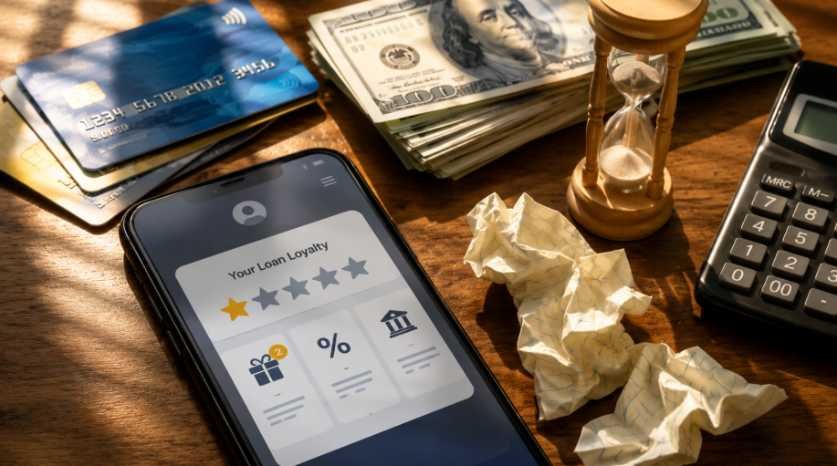
Convenience is a loyalty driver, especially for digital loan journeys.
The Mistake
Some lenders make joining or using the loyalty program difficult. Customers may need separate logins, manual claim forms, coupon codes, or support tickets to redeem benefits.
That friction creates frustration. If a borrower has to work hard to receive an earned reward, the program starts feeling like a gimmick instead of a service advantage.
How To Avoid It
Build loyalty into the normal loan journey. Let customers see eligible benefits inside the app, website, email updates, and account dashboard.
Automatic recognition works best. If someone qualifies for priority support or a fee benefit, show it without forcing them to ask. Frictionless rewards increase participation and satisfaction.
Set-And-Forget Programs
A loyalty program should grow with borrower behavior and market needs.
The Mistake
Many lenders launch a program, promote it for a few weeks, and then leave it unchanged. Over time, rewards become stale, messages stop feeling relevant, and customers forget the program exists.
Interest rate trends, expectations, digital habits, and repayment pressures shift. A static loyalty strategy can quickly become outdated.
How To Avoid It
Review performance every quarter. Track enrollment, activation, redemption, repeat applications, referral quality, repayment milestones, customer satisfaction, complaints, and support themes.
Use those insights to refresh benefits. Rotate seasonal financial wellness content, reactivate dormant members, improve reward visibility, and remove perks nobody uses. Loyalty should feel alive, not abandoned.
How To Apply It
Here is a practical way to use loyalty program mistakes to avoid while building a stronger loan loyalty strategy. Borrowers facing serious repayment stress may also need clear educational resources that explain things to file bankruptcy on student loans before they make major financial decisions.
Map The Borrower Journey
Start with the full loan lifecycle. Review discovery, eligibility checks, application, approval, disbursal, repayment, support, closure, and future borrowing needs.
At each stage, ask what the borrower needs most. Is it reassurance, speed, clarity, flexibility, reminders, education, or recognition? Then connect loyalty benefits to those real moments.
Design Simple Rewards
Choose benefits that support trust and responsible borrowing. Good options include faster service, fee benefits on eligible products, repayment milestone rewards, document pre-checks, credit education, referral recognition, and personalized guidance.
Keep the structure lean. Two or three clear levels are usually better than a crowded tier system. Customers should understand the next step without calling support.
For lenders serving entrepreneurs, rewards can also guide borrowers toward useful resources like women-owned business startup loans when they need funding options that match their business stage and goals.
Test Before Launch
Before going live, ask customers, service teams, compliance teams, and product teams to review the program. Look for unclear wording, unfair conditions, hidden friction, and messages that sound too sales-heavy.
Then refine the experience. A good loan loyalty program should be easy to explain, easy to use, and easy to trust.
Frequently Asked Questions
1. What Are Common Loyalty Program Mistakes?
Common loyalty program mistakes include complex rules, rewards that feel impossible to earn, generic communication, weak personalization, difficult redemption, poor tracking, and offers that push transactions instead of trust.
2. What Are The 3 R’s Of Loyalty?
The 3 R’s are rewards, recognition, and relevance. In loans, they mean useful benefits, appreciation for responsible behavior, and support that matches each borrower’s financial journey.
3. What Are The 4 C’s Of Customer Loyalty?
The 4 C’s are convenience, communication, consistency, and care. Loan customers stay loyal when the borrowing journey is simple, updates are clear, service is reliable, and guidance feels human.
4. What Are The 8 C’s Of Customer Loyalty?
The 8 C’s are clarity, convenience, communication, consistency, care, customization, credibility, and community. Together, they help lenders create trustworthy experiences before, during, and after the loan.
5. Why Do Loyalty Program Mistakes Avoid Loans?
Loyalty program mistakes to avoid matter because loan customers make high-trust decisions. Clear, fair, personalized programs can improve retention, referrals, satisfaction, and responsible repeat engagement.
The Loyalty Glow-Up
The smartest loan loyalty programs do not pressure people to borrow more. They help customers feel informed, supported, and valued at every financial milestone. Avoid complex rules, unreachable rewards, discount-only thinking, generic messages, clunky UX, and stale offers. By focusing on loyalty program mistakes to avoid, lenders can build deeper trust, stronger retention, and happier long-term borrowers.