
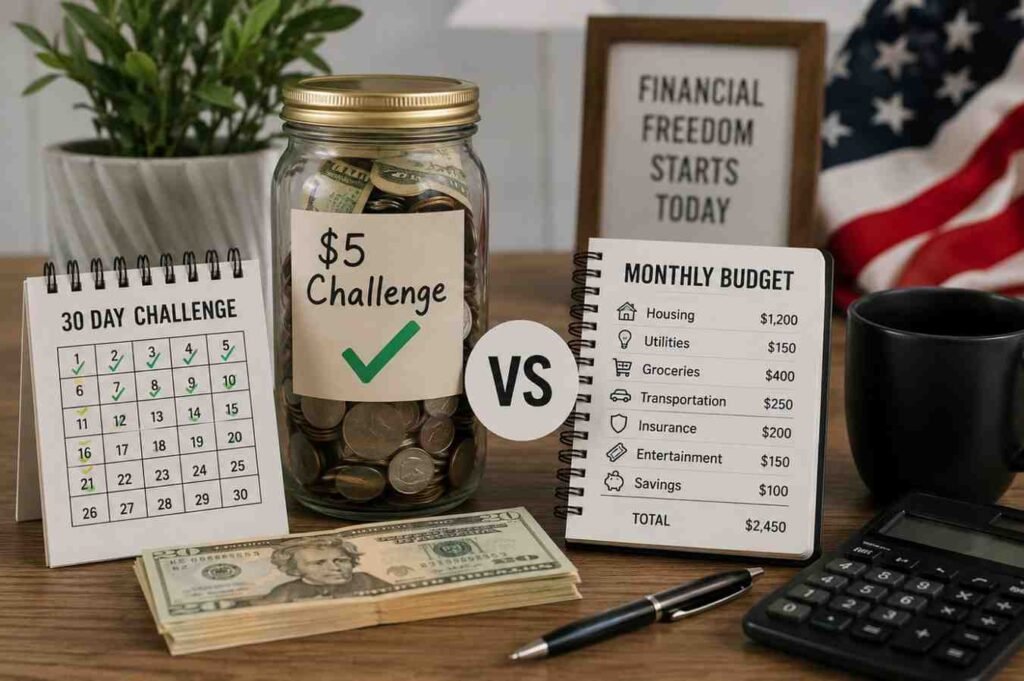
Most people do not fail at budgeting because they are careless with money. They fail because budgeting often feels like a constant reminder of what they cannot do. Every purchase becomes a decision. Every expense feels like a mistake waiting to happen. After a few weeks, the process starts feeling more exhausting than helpful.
I learned this after trying multiple budgeting apps, spreadsheets, and spending trackers. The numbers always looked organized at the beginning. The problem was staying engaged. Saving money felt like a restriction instead of progress. That is where money-saving challenges started making more sense. Instead of focusing on every dollar spent, they shifted attention toward small wins and visible progress.
The Biggest Difference Is Psychological

Traditional budgeting relies heavily on self-control. You set spending limits, monitor transactions, and constantly correct your behavior. Over time, that creates mental fatigue.
Money-saving challenges work differently. They are designed around motivation, momentum, and habit formation.
The structure looks something like this:
Traditional Budgeting → Restriction → Willpower Depletion → Failure
Money Saving Challenges → Milestones → Habit Formation → Success
That difference may seem small, but it changes how people experience saving money on a daily basis.
Why Challenges Feel Easier To Stick With
One reason money-saving challenges perform better is that they use behavioral triggers that naturally keep people engaged.
Gamification Creates Momentum
Budgeting feels like accounting.
Challenges feel like a game.
When someone completes a week of a savings challenge, checks off a milestone, or reaches a target amount, there is a sense of progress. That feeling keeps people moving forward.
Many popular savings challenge ideas are built around this principle. The goal is not just saving money. The goal is to make saving feel rewarding.
Dopamine Rewards Keep Motivation Alive
The brain responds strongly to visible progress.
Every completed milestone creates a small psychological reward. That reward loop encourages repetition. Instead of waiting months to see results, people experience success throughout the process.
Traditional budgeting rarely offers that same feedback. Most people only notice the effort, not the progress.
Finite Timelines Feel Less Restrictive
Telling yourself you need to budget forever feels overwhelming.
Telling yourself you are doing a 30-day challenge feels manageable.
This is why no-spend challenge trends continue gaining popularity. The commitment feels temporary, which reduces resistance. People are more willing to participate when the finish line is visible.
Loss Aversion Makes People Stay Consistent
Once someone builds a streak, they usually do not want to break it.
Missing a challenge day feels like losing progress. That emotional response creates accountability without forcing it.
Traditional budgeting rarely creates that same attachment.
Traditional Budgeting Creates Cognitive Fatigue

One issue competitors rarely discuss is how mentally draining budgeting can become.
Tracking every purchase sounds simple in theory.
In reality, people are making dozens of financial decisions every day. Coffee runs, subscriptions, grocery trips, online shopping, streaming services, delivery apps, and impulse purchases all require attention.
Eventually, decision fatigue sets in.
Instead of simplifying money management habits, budgeting sometimes increases mental workload.
Money-saving challenges reduce that burden because the focus becomes much narrower. Rather than monitoring everything, people concentrate on one specific action.
That shift alone makes saving money consistently easier for many people.
The Behavioral Mechanics Behind Successful Challenges
The most effective challenges are built around actions instead of restrictions.
They encourage positive financial habits rather than constant spending control.
A few common elements appear across successful saving money habits:
- Automated savings transfers
- Specific savings goals
- Weekly progress tracking
- Clear milestones
- Social accountability
- Visual progress systems
These methods reduce reliance on willpower.
When behavior becomes automatic, consistency improves.
Many people even find that money-saving challenges gradually improve spending awareness without requiring strict budgeting rules.
Popular Challenges That Actually Build Financial Habits

Different challenges solve different problems.
The 52 Week Savings Challenge
This challenge starts with small weekly contributions that gradually increase over time.
The reason it works is simple. The early stages feel easy.
People build confidence before the amounts become significant. By the time larger contributions arrive, the habit already exists.
The No Spend Challenge
This challenge focuses on eliminating nonessential spending for a fixed period.
What makes it powerful is not just the money saved.
People begin noticing spending triggers, impulse purchases, and habits they usually ignore. That awareness often creates lasting financial discipline.
Round-Up Savings Challenges
These systems automatically save spare change from digital purchases.
The savings feel almost invisible.
Because the action is automated, there is less opportunity to skip contributions or lose motivation.
Envelope-Based Saving
The envelope method uses physical cash categories.
Seeing money leave an envelope creates what financial experts call the “pain of paying.” People become more conscious of spending decisions because the transaction feels real.
Why Challenges Feel More Human
One reason budgeting struggles to connect with people is that it often treats money as a math problem.
Most financial decisions are emotional.
People spend when stressed. They spend when bored. They spend when celebrating. They spend because of habits, convenience, advertising, or social pressure.
Money-saving challenges acknowledge that reality.
Instead of demanding perfect behavior, they create systems that work with human psychology.
That approach feels more realistic for everyday life.
Can Challenges Replace Budgeting Completely?

Not always.
For major financial goals, budgeting methods still matter. Large expenses, debt repayment plans, and long-term financial planning often require structure.
However, challenges can act as a bridge.
Many people who struggle with traditional budgeting develop financial consistency through savings challenges first. Once the habit is established, budgeting becomes less intimidating.
The challenge creates momentum. The budget helps direct it.
FAQs: Why Money Saving Challenges Work Better Than Traditional Budgeting
1. Are money-saving challenges better than budgeting?
For many people, yes. Challenges are often easier to maintain because they focus on motivation, progress, and habit formation instead of constant spending restrictions.
2. What is the most popular savings challenge?
The 52-week savings challenge remains one of the most popular options because it starts small and gradually increases savings throughout the year.
3. Do money-saving challenges actually work?
They can be very effective when paired with realistic goals. Their success comes from creating consistency, accountability, and visible progress.
4. Can beginners start money-saving challenges?
Absolutely. Many challenges are designed specifically for beginners and require only small weekly contributions to get started.
Final Thoughts
The reason money-saving challenges work better than traditional budgeting is not that they are financially smarter. It is because they are psychologically smarter. They focus on behavior instead of perfection. They create momentum instead of pressure. Most importantly, they make progress feel visible. When people can see results, they are far more likely to continue. That is why so many savings goals begin with a challenge and eventually turn into long-term financial habits.
Saving money does not always require stricter rules. Sometimes it simply requires a system that people actually want to keep doing.